Kot tells you whether your bot's backtest survives honest statistics, real trading costs and prop-firm rules, before you pay for a challenge or risk real money. Every verdict is checked and signed by a person.
The 14 tests in every full validation, run on the real trades of our own gold bot. Drag to rotate, click any square to open it.
The problem
Most backtests are fitted to noise. The research says so. So did our own data.
Try enough versions of a rule and one will look brilliant on the past by luck alone. The largest studies in finance show how often that happens. We ran the same tests on our own bots and got the same answer.
0%
of 452 published market anomalies failed to replicate. With a correction for the number of tries, 82% failed.
Hou, Xue & Zhang · Review of Financial Studies, 2020
Kot found the same70% of 597 textbook trading rules we tested on 12 markets lost money once realistic costs were charged.
<0.025
R² between backtest Sharpe ratio and live results, across 888 trading algorithms. The backtest predicted almost nothing.
Kot found the sameAcross 30,996 snapshots of 648 strategies, past performance had a correlation of −0.001 with the next trades.
t > 3.0
the bar a new finding must clear once hundreds have been tried, instead of the usual 2.0. Most claimed findings are likely false.
Harvey, Liu & Zhu · Review of Financial Studies, 2016
Kot found the sameA naive "keep the best version" test fooled itself 41% of the time with 10 versions and 99.7% with 100. Ours: 4%.
See it happen.
Each line is a strategy with no edge at all: pure coin flips. Generate as many as you like and keep the best one, as a seller would. Then press reveal to see what it did next.
Strategies tried
The engine
Every combination, on every market we can test.
A strategy is a combination of choices: indicators, time frames, entry times, scheduled events, volatility states, calendar filters and exits. The engine can build and test any of them, so it knows how many versions a seller could have tried before showing you one.
Build the search space yourself
0possible strategies on this market
On all 39 markets together
0
Updated every week as markets, inputs and events are added.
Why the number mattersNobody tests them all: testing everything is exactly how you fit noise. The size of the space tells us how high the bar must be for the one version you were shown.
More news, more combinationsMarkets with more scheduled releases have more entry times and calendar filters, so the count differs by market. Click any market below.
Stress-tested on our own ideasOur engine is checked regularly against cases where the right answer is already known, so its verdicts mean what they say.
The 14 tests in every full validation
Click any test to see its chart, why it matters, and what it told us about our own gold bot.
The test library, and where each test stands
Beyond the 14 core tests, we are adding the classic quant-finance toolkit, so a report also covers risk, sizing, regimes and portfolios of bots. A test moves to “in every report” only after it passes its own calibration.
In every report now
Monte Carlo simulationDeflated Sharpe ratioBacktests after real costsProp-firm Monte CarloOut-of-sample yearsMultiple-testing correction
Being added
Return and volatility dashboardValue at Risk and expected shortfallKelly sizing simulatorCorrelation heatmapBeta and CAPM regressionFama–French factor exposureGARCH volatilityRegime detection (HMM)Purged cross-validationMoving-average baselineOptimal execution costsRisk parity and efficient frontier for bot portfolios
Strategy families in our hypothesis library
Momentum with costsPairs tradingPCA statistical arbitrageKalman hedge ratioMarket makingPublished research: SSRN papers being indexed as hypotheses
For options and rates bots (later)
Black–Scholes and binomial pricingImplied volatility surfaceHeston calibrationDelta hedging and deep hedgingMerton credit modelYield-curve PCA
Our own bots, shown honestly
This is how a backtest is usually sold to you.
Six bots we built and traded, rebuilt trade by trade on market data. Start with the view a seller would show you, then reveal what it leaves out. Zoom into any year, month or week.
Drag across the chart to zoom into a period · scroll to zoom · double-click to reset · each view starts at zero.
What you would receive for this bot
The four reports we sell, produced on the bot selected above. Open any of them: your bot gets the same reports, built on its own trade history.
Human review
The engine runs the tests. A person makes the call.
Software can compute a p-value. It cannot read your code and notice that your stop is checked only on candle closes, phone-check what your broker really charges at 22:00, or tell you in plain words what to do next. Every Kot report goes through hours of human work before it reaches you.
Your rules, read by a personhuman
We read your code or rule description line by line and write down exactly what the bot does, including the details that change results: how stops are checked, what happens at the rollover, how orders are filled.
Trades reconciled with your brokerhuman + engine
We rebuild your bot and match its trades to your broker's log, trade by trade. For our own bots: 305 of 305, 119 of 119, 140 of 140. If it doesn't match, we find out why before testing anything.
Costs from your real venuehuman
Spreads by time of day, commission, swaps and slippage, taken from your broker or prop firm, not from a default setting.
The 14 testsengine
Run with fixed rules, decided before we see your results, on an engine that is itself checked against known answers.
Judgement and the verdicthuman
Which tests apply, whether the edge has a believable reason to exist, what the risk to your account really is, and what to do next. Written in plain language.
Second check, signature and a callhuman
Every number is re-checked against the engine output, the report is signed, and you get a 30-minute call to go through it and ask anything.
What the engine does
Rebuilds every trade
Runs thousands of resamples
Simulates prop-firm rules
Corrects for every version tried
What we do
Read and interpret your rules
Reconcile with your broker
Verify your real costs
Judge the mechanism
Write, sign and explain the verdict
“A tool can tell you a number. It takes someone who has been fooled by backtests to tell you which numbers to believe.”Ori, founder. I review every report myself.
Five checkpoints
Data integrity
Statistics
Execution and costs
Security (encrypted, NDA, deleted after 90 days)
Report review
Why you can't just do it yourself
The engine has been built since December 2024, over more than 160 research phases
It is calibrated on known answers
An independent check can't be run by the person who wants the answer to be yes
Pricing
Simple, and below the market.
Comparable audits cost about €99 to €690. While we build our public record, Kot is priced below the middle of that range.
Sealed live monitoring€29 /month Your live trades compared with the validated baseline every month. Minimum three months.
Re-validation€129 The same strategy after changes, or at its passport review date. 5 working days.
Founding offer: full validation at €99For our first five clients, in exchange for an anonymised case study. Your verdict is not influenced, and you are free to criticise us in public.
Manifesto
I set out to prove my bots worked. I ended up building the tool to check anyone's.
The manifesto is the full story: the problems I kept running into, why each one pushed me to the next step, and every phase along the way with what it found, until I realised what I had built was useful to other people. It says what we do and what we learned; how the engine does it stays private.
“I didn't start Kot to sell validation. I started it because I wanted my own bots to work.”
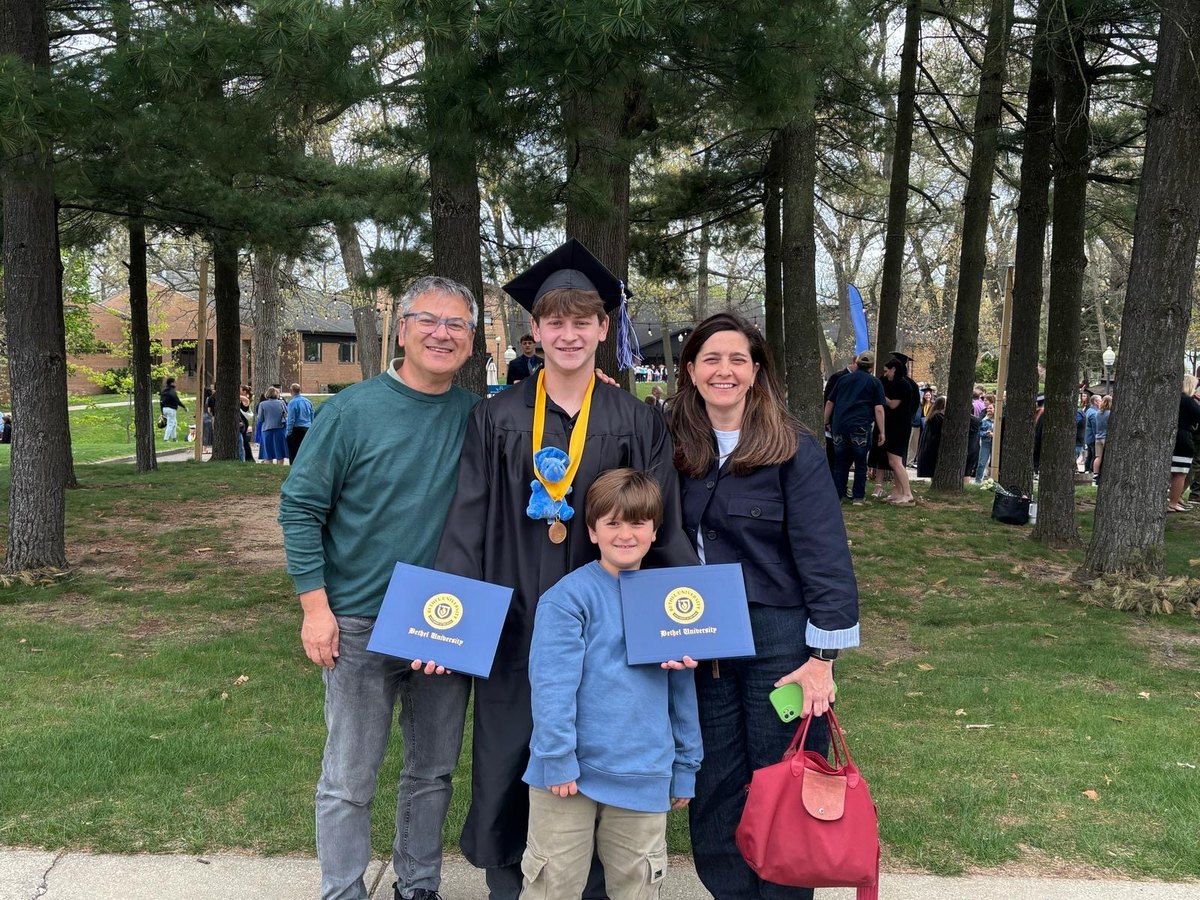
I'm Oriol Montero Pache, Ori, a quant based in Barcelona. I graduated in 2025, the youngest in my class, with a double degree in Economics & Finance and Business Management, cum laude, from Bethel University.
I have been working on this validation method since December 2024. Over more than 160 research phases I tested everything I could on my own bots. Almost every exciting result vanished the moment it met data it had never seen, or the real cost of trading. That taught me the most valuable lesson I have: most edges that are sold are noise, and the only way to know is to test them like a sceptic would.
If your bot is real, I will show you the evidence. If it isn't, you will know before the market tells you.
Send your trade list and the prop account you are aiming for. In 2 working days you get one page with your rough pass probability and the main risk, reviewed by a person.
Questions
Why won't you give me an improved version of my strategy?
Because searching for a better version on the same history is exactly how overfitting happens. If an improvement is worth testing, we write it down in advance and test it on data the search has not seen.
Do you need my source code?
For the prop-firm study a trade list is enough. For the full validation we need the rules in words, the code or the compiled file, so we can reproduce your trades.
Is my strategy safe with you?
Files are used only for your report, stored encrypted and deleted after 90 days. Nothing is published without your written consent, and a mutual NDA is available.
Is the report automatic?
No. The engine runs the tests, but a person reads your rules, reconciles your trades with your broker, checks your real costs, writes the verdict, re-checks every number and goes through it with you on a call.
What if my strategy is rejected?
Then the report has done its job: a €249 rejection is cheaper than a failed challenge or a blown account. The fee is the same whatever the verdict.
Is this investment advice?
No. We assess historical evidence under stated assumptions. We do not manage money, recommend trades or promise future results.